
Guides & insight
From Diesel to Electric: How the Citroën Relay's Powertrain Has Evolved
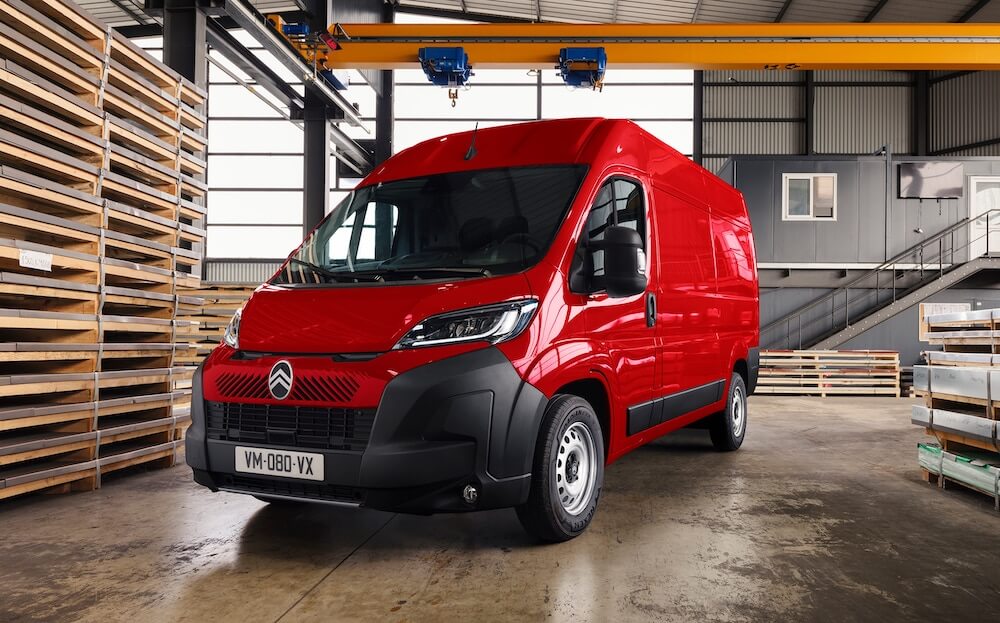
The Citroën Relay has been a cornerstone of Citroën's van range for decades. First introduced in 1994 (badged as the "Jumper" in many European markets), it entered its current third-generation form in 2006, with significant updates in 2014 and beyond. Thanks to its exceptional payloads of up to 1,975 kg and load volumes as high as 17 m³, the Relay has consistently ranked among the most capable large vans on the road, making it a trusted choice for builders, couriers, and fleet operators. Adding to its appeal is the broad choice of configurations, with six diesel body sizes and an increasingly comprehensive electric line-up, giving businesses the flexibility to choose the version that best matches their needs.
While the Relay doesn't always claim the very top spot in van reviews, it is regularly praised as a well-rounded, great-value option. Reviewers highlight its balance of competitive running costs, strong payload figures, and versatile configurations, making it especially attractive to businesses that want capability without the higher price tag of some premium rivals. This "value for money" positioning is also what makes the Relay a popular choice for leasing, where affordability and practicality matter just as much as outright specification.
With the shift from earlier diesels to modern BlueHDi engines and now the arrival of a far more capable fully electric ë-Relay, upgrading to the latest version is more attractive than ever. Choosing a Citroën Relay lease means businesses can access these improvements, including cleaner certification, smarter transmissions, and zero-emission driving, while also reaping the financial benefits of going electric.
So how does the recent upgrade compare to the old, and what can you expect from the latest generation of the Relay?
A Major Powertrain Overhaul for 2024
In March 2024, Citroën announced a major update across its van range, with the Relay, Dispatch, and Berlingo all receiving refreshed powertrains. While the announcement covered the full line-up, the Relay stands out as the largest and most capable model in the range, and the changes to both its diesel engines and electric system are particularly meaningful for high-mileage operators.
Crucially, the overhaul targets greater improved powertrain efficiency, lower operating costs, and tougher certification compliance. For fleets, that translates into a van that keeps the proven carrying capacity of the Relay but is re-engineered to fit today's duty cycles and regulations.
For the Relay in particular, these improvements mean operators now have a van that's not only a proven workhorse, but one that's been carefully re-engineered to meet modern business demands.
How Citroën Relay Diesels Have Evolved
Before the 2024 update, the Relay's diesel range centred on BlueHDi 120 and 140 hp engines, paired exclusively with 6-speed manual gearboxes. These units were robust and already certified to Euro 6d/6.4 standards, but they offered limited transmission choice and only average fuel and CO₂ performance compared with some rivals.
The March 2024 refresh introduced the latest Euro 6e-bis emissions standards. This stage doesn't change the legal emission limits, but it does apply stricter and more realistic test procedures, including tougher real-driving emissions (RDE) checks, a wider temperature range, and more accurate CO₂ reporting.
At the same time, Citroën reshaped the lineup around 140 hp and a stronger 180 hp unit, and added the option of an 8-speed automatic gearbox. These updates mean the newer engines don't just comply with tougher tests, they also deliver more usable efficiency under load and a smoother, more refined drive, helped by improved torque and the availability of the automatic transmission. In many cases, despite the tougher testing procedures, the updated engines still returned improved mpg and CO₂ figures when compared like-for-like with their predecessors.
Old vs New Citroën Relay 140 hp Manual (Euro 6.4 vs Euro 6e-bis)
| Variant | Old CO₂ (g/km) | New CO₂ (g/km) | Old mpg (combined) | New mpg (combined) |
|---|---|---|---|---|
| L2H1 35 Manual | 289 - 228 | 229 - 183 | 25.6 - 40.1 | 32.6 - 41.4 |
| L2H2 35 Manual | 289 - 239 | 229 - 183 | 25.6 - 40.1 | 32.6 - 41.4 |
| L3H2 35 Manual | 289 - 241 | 229 - 183 | 25.6 - 40.1 | 32.6 - 41.4 |
The result is a range that feels cleaner, more usable in real conditions, and better matched to the Relay's six body sizes, while also delivering noticeable fuel economy improvements thanks to the recalibrated Euro 6e-bis engines.
How the ë-Relay's Electric Power Has Advanced
When the ë-Relay first launched in 2020, it offered businesses a zero-emission van option, but it came with compromises. Power was limited to around 122 hp with 260 Nm of torque, and buyers could only choose between a 37 kWh or 70 kWh battery pack. Even with the larger unit, range topped out at around 139 miles WLTP. For many fleets, this made the ë-Relay suitable for short city runs or last-mile deliveries, but not much more.
Fast-forward to the 2024 update, and the ë-Relay has been transformed into a far more capable electric van. It now comes with a 270 hp (205 kW) motor producing 410 Nm of torque, powered by a 115 kWh battery. Range has nearly doubled to 261 miles WLTP, thanks to a combination of improved powertrain efficiency, smarter energy management, and a larger 115 kWh battery, making it viable not just for urban routes but also regional deliveries and longer duty cycles.
Charging is also far quicker: with support for up to 150 kW DC, the battery can reach 80% in just 55 minutes, while a full charge takes around 6 hours on a 22 kW AC supply (or 16h 40m on a 7.4 kW charger).
Crucially for businesses, the new ë-Relay now offers higher payloads (up to 1,460 kg on 4.25 t versions), the ability to tow up to 2,400 kg braked (placing it among the best vans for towing heavy loads) and, for the first time, a body size offering that closely mirrors the diesel line-up.
Where the older EV was restricted mainly to L3 and L4 panel vans, the 2024 ë-Relay expands availability across multiple configurations, ensuring operators don't have to compromise on body choice when going electric.
Alongside the improved hardware, the ë-Relay introduces three driving modes and four levels of regenerative braking adjustable via steering-wheel paddles. This gives drivers greater control over energy use and allows fleets to maximise efficiency based on their operational needs.
In short: the ë-Relay has moved from being a city-focused EV into a close alternative to diesel, with the power, range, payload, and usability that many businesses need.
Real-World Benefits of the 2024 Citroën ë-Relay
- Up to 88% longer range for fewer charging stops
- 1,460 kg payload capacity - among the best in class for large EV vans
- 2,400 kg towing capability for greater flexibility
- Faster charging: 80% in under an hour
- Four levels of regenerative deceleration not available on pre-2024 models
Why Citroën Pushed the Overhaul
Citroën's overhaul of the Relay wasn't just about launching "new" engines and batteries - it was about staying relevant in a market that's changing fast. On the diesel side, the introduction of tougher Euro 6e-bis standards meant the old engines could no longer stay on sale without re-engineering. Rather than simply tweaking them for compliance, Citroën used the opportunity to add refinements that make a genuine difference in day-to-day use, such as the availability of an automatic gearbox and engines tuned to deliver smoother torque under load. For businesses, that means a van that feels more up to date, more efficient, and more pleasant to drive, while still retaining the Relay's trademark value-for-money positioning.
The story is similar for the ë-Relay. The first-generation model gave Citroën an important foothold in the electric van market, but its limited range and payload capacity made it a niche, city-focused option. Customer feedback and a fast-moving EV landscape meant that wasn't enough anymore. The 2024 update transforms the ë-Relay into a credible diesel alternative, not just an eco badge. It was redesigned to meet real-world business demands: longer routes, heavier loads, faster charging, and more body styles to choose from. This isn't simply a van adapted to regulations - it's one shaped around the realities of how builders, couriers, and fleet operators actually work.
Citroën's update wasn't just about drivetrains. The 2024 Relay also arrives with a smarter suite of safety and driver-assistance features and a cabin that's been reworked for cab comfort and workspace. These changes sit alongside the new powertrains, making the Relay a more rounded van in every respect.
Looking to upgrade your fleet?
Explore our latest Citroën Relay and ë-Relay leasing offers to find the perfect fit for your business - Get a Citroën Relay Quote Today
What the 2024 Updates Mean for Leasing Customers
For leasing customers, the 2024 overhaul does more than modernise the Relay, it reshapes value across key factors that affect van leasing costs, from fuel economy to downtime and tax efficiency.
1. Predictable running costs
The updated diesel engines and advanced BlueHDi systems make fuel consumption and emissions more consistent in real-world driving. For leasing customers, that means better cost forecasting and fewer surprises when managing fuel budgets or emissions reporting across a contract term.
2. More leasing flexibility across diesel and electric
Citroën's decision to align the ë-Relay's body sizes and payloads more closely with the diesel line-up is a major advantage for lease customers. It allows businesses to choose between diesel or electric with minimal compromise on configuration, meaning fleets can scale into EVs gradually, without needing to redesign their operations or storage setups.
3. Simplified fleet integration
With both diesel and electric versions now offering similar dimensions and usability, mixed fleets can standardise more easily. That means smoother driver transitions, simplified maintenance planning, and easier policy management for fleet operators and leasing providers alike.