

Rated 4.8 out of 5 on 
Towing capacity stands as a paramount consideration for industries where the dependable haulage of heavy loads is not just an option, but a necessity.
This article immerses itself in the realm of vans that transcend expectations in towing capabilities. Whether compact, mid-sized, or robustly large, each van category brings distinct advantages tailored to the demands of towing voluminous cargo.
From the streets of urban centres to long motorways that interconnect regions, the potency of these vans is strategically calibrated to meet the challenges of their respective terrains.
Small vans may be compact, but they can pack a punch for towing. These versatile vehicles find their place in urban environments, delivery services, and more. Notable models in this category include the VW Caddy Cargo, Fiat Cargo, and Vauxhall Cargo, which defy their size with impressive towing capacities.
So why opt for a small van that can tow like a heavyweight champion? The answer lies in the unique challenges that city life presents.
In urban areas, space is a valuable commodity. Parking spaces are scarce, streets are narrow, and maneuverability is key. A small van, armed with the ability to haul a substantial load, allows businesses and individuals to tackle logistical challenges head-on without sacrificing agility and time.
| Van Model | Max Towing Capacity / Kg |
| Volkswagen Caddy Cargo | 1,500 |
| Fiat Cargo | 1,500 |
| Vauxhall Combo Cargo | 1,350 |
| Citroën Berlingo | 1,250 |
| Peugeot Partner | 1,250 |
| Nissan NV200 | 1,100 |
| Renault Kangoo | 1,050 |
| Mercedes-Benz Citan | 1,050 |
| Ford Courier | 895 |
* The figures in this table are based on the vehicles VanLeasing.com has on offer.
Medium-sized vans bridge the gap between compact and heavy-duty towing. Their adaptable nature makes them indispensable for a range of towing scenarios. Models like the Ford Custom, VW Transporter, and Vauxhall Vivaro showcase their towing prowess, making them a favourite among contractors and haulers.
Medium-sized vans serve as a pivotal link between compact vehicles and heavy-duty trucks for your business when it comes to towing capabilities. Their unique combination of power, versatility, and maneuverability renders them indispensable for a wide array of towing scenarios.
These vans, including the Ford Custom, VW Transporter, and Vauxhall Vivaro, exhibit impressive towing prowess, which has solidified their position as favourites among contractors, haulers, and individuals requiring impressive towing capabilities.
The key advantage of medium-sized vans lies in their ability to balance towing performance with everyday utility. They possess the power necessary to pull substantial loads while retaining the agility to navigate urban environments and tight spaces with relative ease. This versatility extends their application beyond just towing; they can also function as efficient cargo carriers during the times when towing isn’t required.
| Van Model | Max Towing Capacity / Kg |
| Ford Custom | 2,800 |
| Volkswagen Transporter | 2,500 |
| Vauxhall Vivaro | 2,500 |
| Citroën Dispatch | 2,500 |
| Peugeot Expert | 2,500 |
| Renault Trafic | 2,500 |
| Mercedes-Benz Vito | 2,500 |
| Nissan Primastar | 2,000 |
| Fiat Fiorino | 1,300 |
* The figures in this table are based on the vehicles VanLeasing.com has on offer.
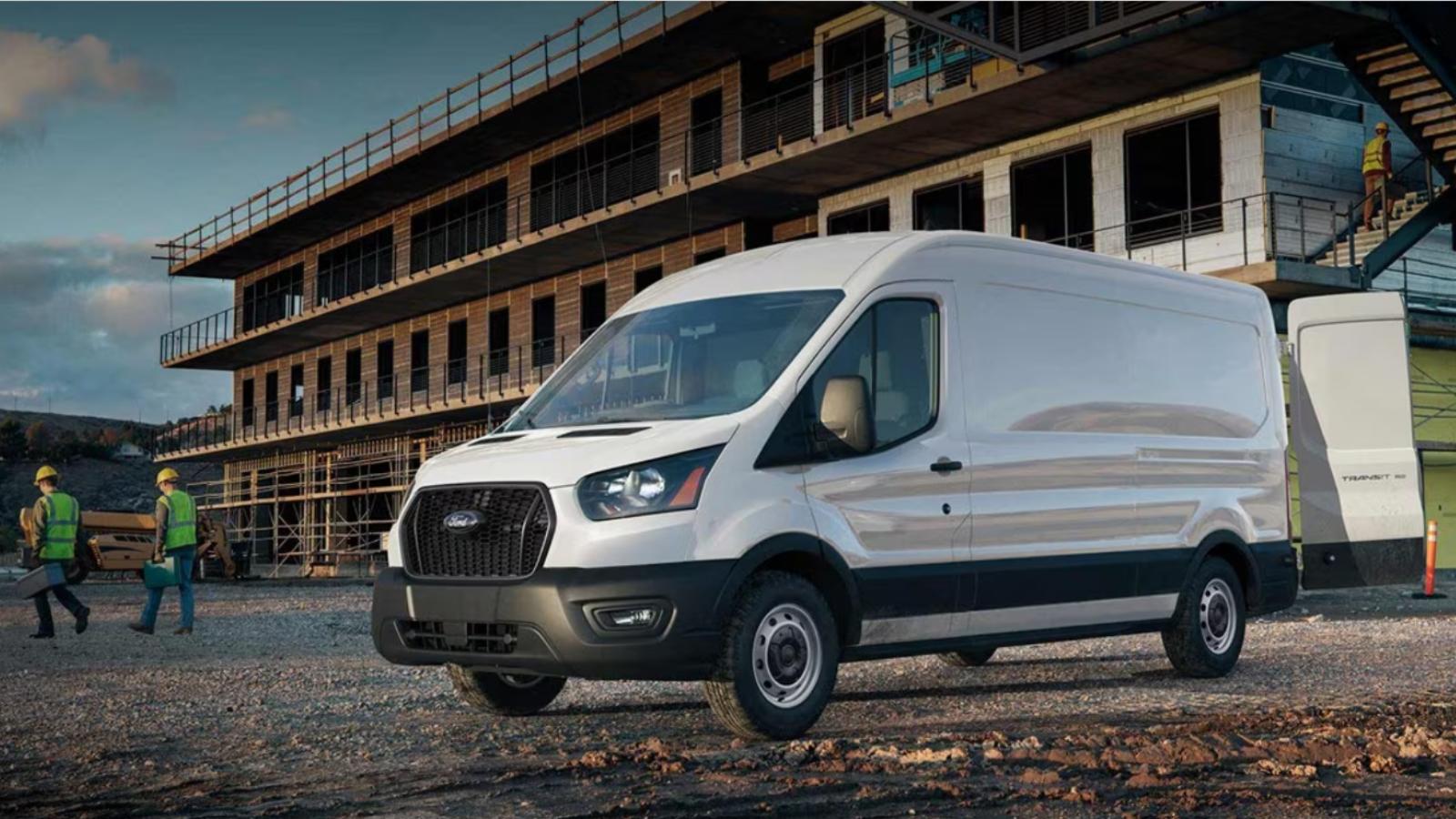
When it comes to heavy-duty towing, large vans step onto the scene as true titans. These workhorses handle substantial loads and are favoured by industries such as construction, logistics, and recreation. Their robust build and powerful engines equip them to haul sizable trailers, machinery, and equipment with remarkable ease and efficiency.
Towing is of paramount importance for large-sized vans due to several compelling reasons:
Versatile Hauling: Large vans are designed to transport considerable payloads, and towing extends their capabilities even further. Whether it’s delivering construction materials to a job site or hauling a trailer full of recreational equipment for a weekend getaway, the ability to tow expands the range of tasks these vans can accomplish.
Cost-Effective Efficiency: For businesses that frequently transport heavy loads or equipment, towing with large vans can prove to be more cost-effective than employing separate towing vehicles. This consolidation of tasks streamlines operations and optimises resources.
Optimised Productivity: Large vans equipped with towing capabilities enhance productivity by reducing the need for outsourcing towing tasks to specialised vehicles or services. This independence allows businesses to maintain control over their operations and schedules.
Adaptability: Towing transforms large vans into adaptable tools for a myriad of applications. From carrying construction machinery to towing mobile offices, these vans can be tailored to suit specific business needs with towing as an added advantage.
Maximised Utility: Towing ensures that the full cargo capacity of the van can still be utilised even when towing a trailer. This dual-purpose functionality optimises each trip, maximising the efficiency of time and resources.
| Van Model | Max Towing Capacity / Kg |
| Ford Transit | 3,600 |
| Volkswagen Crafter | 3,500 |
| Nissan Interstar | 3,500 |
| Mercedes-Benz Sprinter | 3,500 |
| Citroën Relay | 3,000 |
| Renault Master | 3,000 |
| Fiat Ducato | 3,000 |
| Vauxhall Movano | 2,500 |
| Peugeot Boxer | 2,500 |
* The figures in this table are based on the vehicles VanLeasing.com has on offer.
Towing isn’t just about raw power—it’s about safety and control. Modern vans come equipped with an array of features designed to enhance the towing experience. Towing hitches, trailer sway control, and advanced brake systems ensure stability on the road. Safety features like adaptive cruise control and lane-keeping assist provide an added layer of protection. Proper weight distribution and quality towing equipment are crucial for maintaining stability and reducing wear and tear. For those looking to optimise their towing setup, optional accessories like extended side mirrors and backup cameras prove invaluable.
Towing capacity stands out as a pivotal game-changer. Small, medium, and large vans cater to diverse industries and needs, continually evolving with advanced towing capabilities and safety features that elevate their significance in heavy hauling.
However, when selecting a van based on towing capacity, it’s crucial to consider a holistic set of factors. Beyond towing capacity, the interplay of payload capacity, stability, braking efficiency, and adherence to legal limits forms a critical ecosystem.
A holistic approach aligns towing and payload capacities, stability, braking efficiency, and legal compliance, ensuring a safe and efficient towing experience. As vans continue to evolve, making informed choices that consider these facets is key to harnessing their full potential in towing and beyond.
By embracing these considerations, businesses and individuals alike can confidently navigate the challenges of heavy hauling, ensuring both the safety of the road and the efficiency of their operations.